
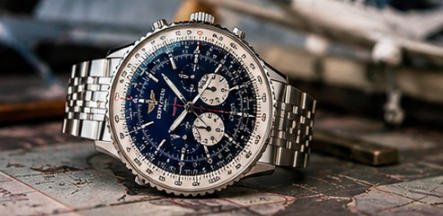
Breitling has built its reputation around aviation-inspired watches, distinctive dial layouts and a strong connection to professional timing instruments. From the familiar circular slide-rule bezel of the Navitimer to the sportier appearance of the Chronomat and Superocean collections, the brand has a design language that is easy to recognize. These characteristics are also why Breitling replica watches attract attention from people interested in the look, proportions and mechanical style of the original designs.
For anyone exploring this category, appearance is only one part of the decision. Case dimensions, dial details, movement information, finishing and everyday usability all affect how a watch looks and performs. Our website focuses on Breitling replica watches and related watch-design information, helping readers understand the details that matter when comparing different styles and configurations. These watches should not be confused with genuine Breitling products or presented as brand-authorized merchandise. A replica is not an authentic Breitling watch, even when its external appearance resembles an original model.
Understanding Breitling-Inspired Watch Designs
One reason Breitling-inspired designs remain recognizable is that their visual features usually serve a clear purpose. The Navitimer, for example, is associated with aviation and its circular slide-rule bezel. The layered scales give the dial a technical appearance, while the combination of numerals, markers and hands creates a look that is different from that of a conventional three-hand watch. When comparing a Navitimer-inspired replica watch with reference photographs, it is useful to look beyond the overall resemblance and consider the spacing of the scales, the relationship between the bezel and dial, the placement of the date window and the balance of the case.

The Chronomat has a different personality. Its sportier case design, distinctive bezel elements and bracelet options create a more substantial appearance on the wrist. The Superocean, by contrast, follows a diving-watch design language in which legibility, bezel design and practical handling are central considerations. These differences matter because there is no single set of visual rules that applies to every Breitling model. A useful comparison starts with the specific collection and reference rather than a general impression that a watch looks like the brand.
Readers interested in the details of Breitling replica watch designs and model differences should also consider the age and configuration of the watch being used as a reference. Similar-looking models may have different case sizes, dial layouts, movements or bracelet designs. Comparing the wrong generation can make a legitimate design variation appear to be an inconsistency, while relying on a single photograph can conceal important differences.
Case Proportions, Dial Details and Materials
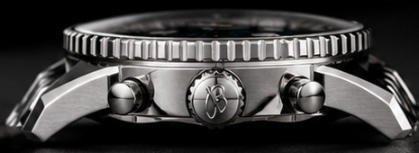
The case is often the first thing people notice, but its appearance depends on more than diameter alone. Thickness, lug shape, bezel height and the transition between brushed and polished surfaces all contribute to the way a watch sits on the wrist. A case that looks proportionate in a product photograph may feel quite different in person, particularly when the bracelet, crown and bezel add visual or physical weight. For this reason, case measurements are most useful when they are compared using the same reference points and a consistent method.
Dial details deserve the same attention. Lettering, applied markers, minute tracks and subdial placement can make a substantial difference to the overall impression of a watch. On a Navitimer-style dial, the numerous markings create a dense visual arrangement, so alignment and spacing become especially noticeable. A photograph may help identify an obvious printing issue or a visible difference in layout, but image quality, reflections and camera angle can affect what is seen. A clean-looking dial is not, by itself, evidence of authenticity or proof of the materials used.
Material descriptions also need careful interpretation. Stainless steel, sapphire crystal and different types of surface finishing are commonly mentioned in watch listings, but a description does not independently verify what a particular watch is made from. When material composition is important, visual inspection should be treated as an initial observation rather than a definitive test. This is especially relevant when reading Breitling replica watch reviews and specifications, where advertised details may not be supported by independent measurements or technical documentation.
Using the Navitimer Automatic 41 as a Reference
The Navitimer Automatic 41 provides a useful example of how model-specific information can improve a comparison. Breitling’s official listing for reference A17326241B1A1 describes a stainless-steel case measuring 41 mm in diameter and 10 mm in thickness. The watch uses the self-winding Breitling Caliber 17, with an approximate 38-hour power reserve, a frequency of 28,800 vibrations per hour and 25 jewels. The official specifications also identify a bidirectional slide-rule bezel, a cambered sapphire crystal with glare-proofing on both sides and water resistance rated at 3 bar.
These specifications provide a clear starting point for understanding the intended configuration. The first step is to make sure the watch being discussed is actually the Navitimer Automatic 41 and not a chronograph or another Navitimer variant. The Automatic 41 has a different dial arrangement from Navitimer chronographs, so expectations about subdials and chronograph functions should not be transferred from one model to another.
For accurate comparisons, consult the official Navitimer Automatic 41 specifications and use them as a reference for the stated model. Measurements, visible design details and movement information answer different questions. A case measurement can show whether the dimensions are consistent with the published figures, but it cannot establish the identity of the movement. A watch that runs and keeps time may still contain a different movement from the one claimed. Likewise, a matching dial layout does not prove that the watch was manufactured or assembled by Breitling.
This distinction is important when researching Breitling replica watches with Navitimer-style details. Rather than treating one matching feature as a final answer, compare each available piece of information separately. Record which details are consistent with the reference, which differ, and which cannot be verified from the available evidence. This approach produces a more useful assessment than relying on a general impression of similarity.

Movement, Function and Everyday Use
Movement information is another area where careful wording matters. Mechanical watches can differ in winding behavior, timekeeping performance, power reserve and the way their functions operate. However, none of these observations alone establishes the origin of a watch. A watch may run smoothly without containing the movement specified for the model, while a genuine watch may perform poorly because it needs servicing or has suffered damage.
When reviewing automatic Breitling replica watches, it is therefore helpful to separate basic operation from technical identity. Whether the hands move, whether the crown responds and whether the watch keeps time during a short observation are questions about function. Identifying the actual movement requires more specific evidence. If internal construction or movement identity matters, a qualified watchmaker is better placed to examine the watch and explain what can be established.
The same principle applies to water resistance. A published rating describes a specified configuration under defined conditions; it should not be treated as a guarantee that every watch carrying similar markings will withstand water exposure. Age, damage, seals and previous servicing can affect performance. A professional pressure test may provide information about water resistance, but it does not authenticate a watch or establish its manufacturing history.
Photographs, Documentation and the Limits of Verification
Photographs are useful for comparing visible features, documenting condition and identifying details that deserve closer inspection. They are less useful when asked to answer questions about hidden components, materials or provenance. Lighting can change the appearance of a dial, reflections can obscure markings, and camera perspective can distort proportions. Image compression and editing can further limit the reliability of small details.
Documentation should also be considered in context. Serial numbers, reference markings, packaging and purchase records may help build a picture of a watch’s history, but their presence does not automatically prove that the watch is genuine or that the documents belong to that specific item. A responsible assessment considers how the available evidence fits together and makes any gaps clear.

For readers researching how to compare Breitling replica watches with genuine models, a useful report should distinguish between three things: what can be directly observed, what appears consistent with published information, and what remains unverified. For example, a case may appear consistent with the official dimensions while its movement and provenance remain unknown. Stating that limitation is more accurate than making a definitive claim based on a photograph.
When a purchase decision depends on authenticity, the safest approach is to seek independent professional assessment and reliable documentation. No single photograph, engraving, timekeeping result or water-resistance test can establish every aspect of a watch’s identity. A clear explanation of the available evidence is more valuable than a confident conclusion that goes beyond what has actually been checked.
Choosing What to Compare
Before comparing watches, decide which characteristics matter most to you. Some readers focus on case size and wrist presence; others are more interested in dial layout, bracelet design or movement information. A reference-based comparison helps keep these priorities separate and reduces the chance of judging one model by the specifications of another.
For a more detailed overview, visit our Breitling replica watch design and comparison guide, where you can connect the main design features with the model details discussed above. Before publishing, make sure this link points to a real, relevant page on your website and that the page title and content match the linked phrase.
Ultimately, understanding Breitling-inspired watches requires more than recognizing a familiar logo or dial. The model reference, case proportions, design details, movement information and limits of the available evidence all deserve consideration. By approaching each feature separately and avoiding assumptions about authenticity, readers can develop a clearer understanding of what a watch appears to offer and what still needs independent verification.